
Red Dot 2020 Winner!
Fos/4 studio panel is a Red Dot winner!
I’m incredibly proud to announce that the Fos/4 studio panel light has received a Red Dot design award for 2020. I worked on the design of this product as a member of the small, in-house team at ETC. My former colleagues and I put a great deal of energy into maintaining the integrity of this design and searching for novel methods to provide benefits to our end users.

24”, 16”, and 8” models of the Fos/4 studio panel.

RISE Home Baked Goods
Hey everybody. I love a good logo design as much as the next guy, but it’s even better when I get to design one for somebody close to me.
My beautiful wife, Allie, is an excellent baker and has received much encouragement to create an Instagram account for her absolutely appetizing baking stories. Her desire to share her delicious baked goods with the world gave me the opportunity to design a graphic to give a visual identity to her endeavors.
You should all follow her on Instagram at RISE Home Baked Goods. Look for the logo below!


Creality Ender 3 Review

After sitting on the sidelines for several years and watching as consumer 3D printers took off, I finally took the plunge and purchased one of my own.
In order to get the sale price I had to purchase directly from Creality. This felt a little risky, as I was unsure if my product was going to ship all the way from China on the slow boat, or if they had stock in the states ready to ship. The tracking information was a little vague, so I never really found out. But I can say that it arrived in a little under two weeks, and the customer service I received when inquiring about my purchase was friendly and fast.
The package arrived in good condition with no problems. As the photo shows it was packed in a neatly and organized manner with all related parts kept together and even a partially connected wiring harness. The instructions were more helpful than I expected, but occasionally skipped a step and seemed to be written by someone who spoke English as a second language.
An abbreviated view of my assembly process can be seen in the series of images below. All said, it was a fairly simple process. Anyone who is comfortable taking something apart and putting it back together should have little trouble assembling the Ender 3. The points where hardware line up are pretty apparent, and the wire connectors are clearly labeled to avoid wrong connections where possible. (Although I did accidentally swap my Z and X axis once while adding a modification.)

Getting up and running required a small amount of detail work. I needed to tighten the pulleys that connected the extruder head to the gantry and level the heated bed. But there were plenty of videos and forums to help with that. (If you’re curious this video demonstrates a good manual method from about 2:00 - 2:40.)
Once I had it running I wanted to print anything and everything! There are tons of fun little items available for free on Thingiverse that are perfect for beginners and print in a few hours. The files will need to be converted from .stl to .gcode first though. Currently I use a free slicing program called Cura by Ultimaker.
The video below shows the printer in action. It’s fun to watch and I recommend always monitoring the first layer of a print to make sure everything adheres well to the bed. If that all goes well the rest of the print is usually good.
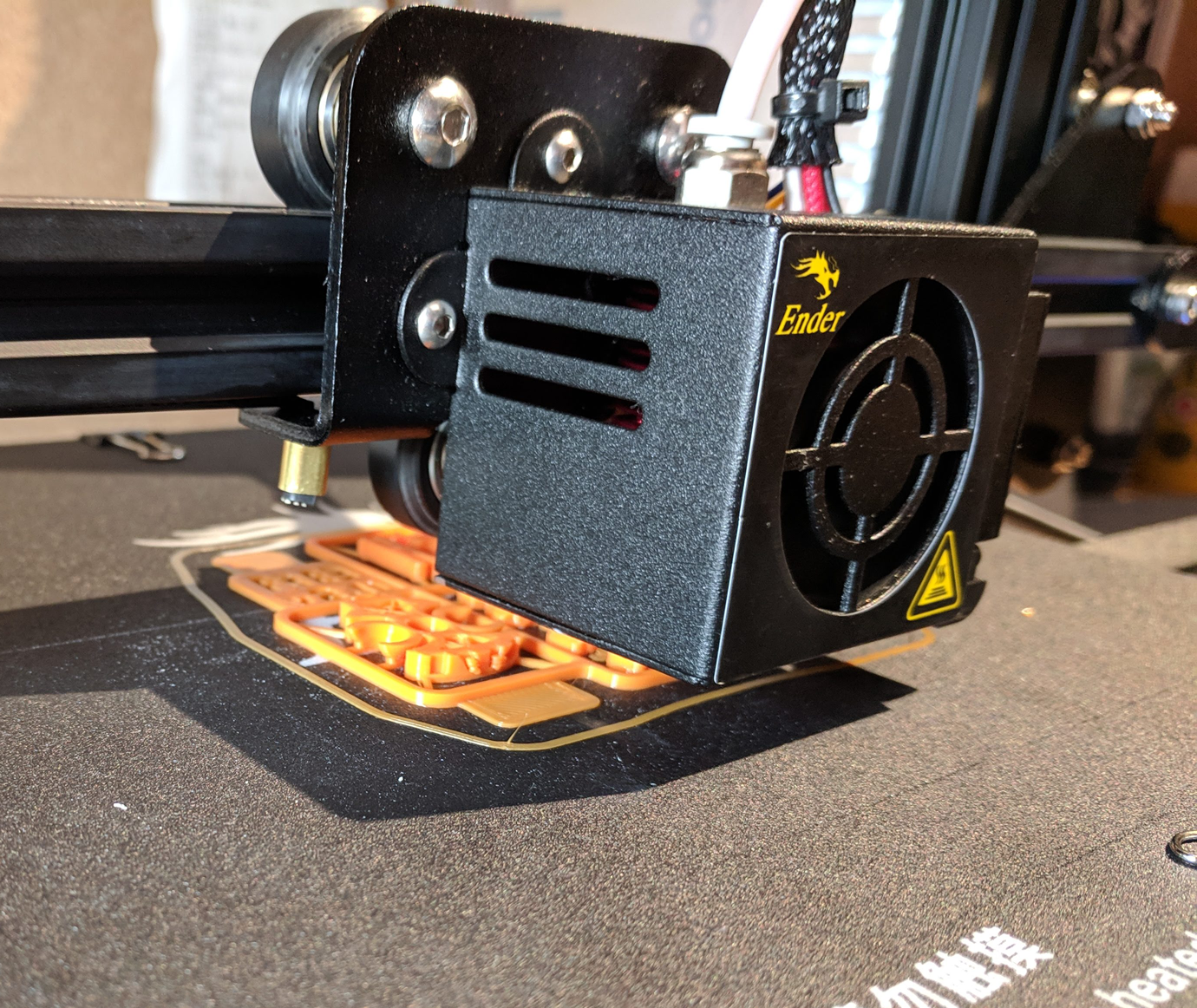
Printing a little snap-pack robot!
As much as I enjoyed printing and assembling the little snap-pack robot seen below not everybody in my household was as convinced of the wisdom of my purchase as I was. However, I soon found ways to prove the usefulness of my new printer beyond just cool toys and do-dads. When I successfully printed a new nozzle for our Dyson vacuum that functioned just as well as any we could have bought the value of my purchase started to become clear. Since then I have been tasked with printing custom cookie cutters, puppy statues, and anatomical heart models just to name a few.


The latest project I’ve enjoyed is not unique to the Ender 3, but a fun part of owning any printer. Part of the beauty (and “Skynet-ish” terror) of a machine that can make more objects is that you can use those objects to improve the machine. I’ve only implemented some basic modifications so far, but they are working well. The images below show the cable chain and z-axis stablizer I recently printed. Both serve to simply improve the organization of components and safe guard against damage. But the fact that I printed them on the same machine makes it that much cooler in my opinion.


All things considered, I have high recommendations for this little printer. It has a decent build space, is simple enough to assemble and use, and available for a very reasonable price. If you are interested in 3D printing as a hobby the Ender 3 is a good fit for you.

Pondering Plastic
Pondering the precious nature of plastic and it's status as garbage.
Precious Plastic is an initiative that I came across while reading a favorite blog of mine not long ago. The video below explains it much better than I could, but there are a couple points I would like to focus on. One, I am a fan of almost anything that increases an individual's ability to create what they need for themselves. Two, I find it even more intriguing when trash turns out to be valuable. Watch the video below and you'll understand more.
It would be very easy to view this as simply another recycling campaign that makes you feel bad for enjoying all the great things that create waste in our culture. While there is certainly an undeniable call for environmental responsibility I see this as much more than that. It is a very real opportunity to capitalize on a resource that is LITERALLY just laying around.
One of plastic's properties that makes it both so useful and so damaging is that it takes an incredibly long time to break down in nature. Natural materials with those properties (e.g. gold, silver, diamonds) are so valuable we based our currency on them for thousands of years. Why is plastic treated like waste? Most plastics that went into the dump 20 years ago are just as useful now as they were then.
"Natural materials with those properties... are so valuable we based our currency on them for thousands of years."
I understand that nobody gets excited about a ring with a piece of plastic on it, or a beautiful sculpture plated in high density polyethylene. But I think we must admit how odd it is that such a useful material that we constantly make more of is just laying around in piles. I'm willing to bet we've all seen the pictures of beaches clogged with plastic bottles and bags. Even if you don't live near a location like that it's likely that there is a sizable amount of plastic that sits on the curb by your house each week.
All these factors combined with the eventual scarcity of petroleum make me think there has to be a business model here for an enterprising individual. The growing popularity of Thingiverse and Kickstarter lead me to believe that we will see more 'garage manufacturing' like this in the future.

The Wallet Ninja: Slender, Not Deadly
Behold, the mighty Wallet Ninja.

Behold, the formidable Wallet Ninja. Mine has clearly seen some battle.

At the size of a credit card it fits well in both your hand and wallet.
The product featured in this post is by no means new but has proven itself to be so useful I felt it deserved special attention. Shown above is the Wallet Ninja. Upon first examination it does not appear terribly exciting, just a flat piece of metal with a number of different shaped holes and perforations. Looking closer it becomes clear that these opening have been labeled to indicate their intended usage. It doesn't take a seasoned skeptic to be doubtful of some of their claims.

While it sounds like a gimmick, the phone stand feature proves to be useful.
However, just looking at this tool does not take into account what might be it's defining feature. The Wallet Ninja is SUPER strong. Even at just 1.5mm it cannot be bent by hand. I have pried open many a paint can, wiggled it into door jams, and picked out staples but it has yet to give. With the strength of 4x heat-treated steel those little outlines in the shape become fully functional tools.
While a few of these tools are meant to pry, punch, or tear none are designed to cut. This makes the Wallet Ninja travel friendly. I have gone through airport security with this as carry-on multiple times and have never had a problem.
At just $10 it's a great buy for what it provides. If you can get past the tacky, informercial-esque website I'd recommend ordering directly through them. But if that's too much it's also available on Amazon.
As something of a multi tool enthusiast I'm rather partial. If anybody has a different take or prefers a competing product I welcome feedback in the comments.
The Game Advocate
I've always felt that a strong parallel exists between game design and industrial design.

I've always felt that a strong parallel exists between game design and industrial design. During my education and experience in product design I have found that two considerations account for the majority of a product's quality: what the user experiences and the physical form of the product. Games are certainly an experience of one sort or another. And in our consumer driven society they frequently take the form of a product. Even if that product is a digital manifestation we still perceive it as a collection of objects, characters, and sounds within a crafted environment.
Maybe that's why I was excited to learn that my friend, Andy, recently launched his website, The Game Advocate. While this post is certainly an excuse to put in a plug for my friend (and to link myself to his website which will likely accumulate far more traffic than my blog and personal site ever will) I assure you there are plenty of interesting connections between the world of video games and the process of designing new products.
"Even if that product is a digital manifestation we still perceive it as a collection of objects, characters, and sounds within a crafted environment."
You don't need to be familiar with any specific games to understand how the same considerations that create a successful game also help to make a great product. In either scenario the designer still begins by asking many of the same basic questions. Who is my target user? What is their objective? What kind of experience do I want them to have?
Technological advances aside, it might be safe to say that the design of games has more to lend to the profession of product design than the other way around. By that I mean that it is at the core function of games to provide information to a player in a manner that they intuitively understand and respond appropriately to his or her choices.
When we design objects for people to use we often place all of our focus on the ability of the object to perform its intended task with the greatest success using the least amount of materials. While this is certainly the mark of a well made product it is important to remember that we are making this object to be used by many unique individuals who have had no part in it's design.
For the game maker, the ability of all potential users to understand the functions and interactions of his or her product is paramount. If you've ever played a game where the basic principals of play were obscured or difficult to grasp you understand why this is important.
"Who is my target user? What is their objective? What kind of experience do I want them to have?"
Another area where these two professions have a strong tie is the link between imagination and reality. Video games and science fiction films have provided some of the strongest visions of potential products in the past several decades. Futuristic gadgets, heads-up information displays, menu navigation, and stylistic design of vehicles and structures are all envisioned and pushed forward by games.
Video games provide a space to explore possibilities and bring them right to the edge of reality without the burden of physical creation. The designer is free to generate a wealth of content and potential solutions without ever needing to slow down to consider what's possible. We then experience all of these fantastic and outlandish solutions through the act of play, thus allowing us to consider them without the constant tug of pragmatism.
In short, I think the open-ended creativity to make something people are excited about is what connects game design to my profession of choice. I continue to be a huge fan of the imagination that games inspire and would encourage fellow designers to seriously consider their contributions.

Microsoft Arc Mouse Tear-Down
Arc Mouse: Tear-Down and Review

Credit: Google images
In my course of work I had the opportunity to test and disassemble Microsoft's Arc mouse.The Microsoft Arc Mouse was first released in 2010 as part of the Microsoft Surface brand line. It has undergone a few revisions in the subsequent years but the basic functionality
remains the same.
It was designed by Carbon Design Group in Seattle prior to their acquisition by Oculus. The Arc Mouse comes in black, gray, and white. There is also some variety between models in the texture of the ‘skin’ and the surface finish of the button pad.

Top, Bottom, and Bent
The Arc Mouse has three features that are particularly distinguishing. These features span the categories of design, hapitcs, and components.
Alongside an elegant visual design this mouse also features a rather unique interactive element. The mouse automatically powers on when bent into an arc, and powers off again when it is folded flat for travel.
The matte-textured layer of rubber that serves as the skin for this mechanism covers any pinch points or visible hinges. This gives the mouse a much more organic and approachable feel.
In the tangent category of haptics the scroll pad of the Arc Mouse also provides an excellent interactive experience. Where one would normally expect to find a scroller wheel there is a touch sensitive track pad. The track pad controls the scrolling function in the same fashion as a physical wheel. However, it also provides haptic feedback in a manner that mimics the progress of a traditional, indexed wheel. It even allows the user to let the ‘wheel’ free-spin with a quick push across the surface which results in a pleasant decrescendo of haptic 'clicks.'

Track pad surface and assembly
The secret to this feature lies in a key component. The vibratory feedback for the track pad is generated by a Samsung piezo haptic actuator. Unlike ERM and LRA vibration motors a piezo actuator delivers feedback in realtime (sub millisecond). This creates a very seamless interaction with the trackpad that keeps up with rapid changes in speed and position of the user’s finger.
All of these features combined with a 100 meter Bluetooth range makes this mouse ideal for a frequent traveler or nomadic professional. And with prices starting at about $30 and rising to around $70 for the newest model it's available to most potential users.
A word to the wise though. If you want to take yours apart like I did be prepared for a bit of a struggle plugging the ribbon cable back into the PC board. And if you ever want to use it again I recommend leaving the spring-metal arc covered. I've included a technical rendering below for anyone who's curious.

Credit: Carbon Design Group
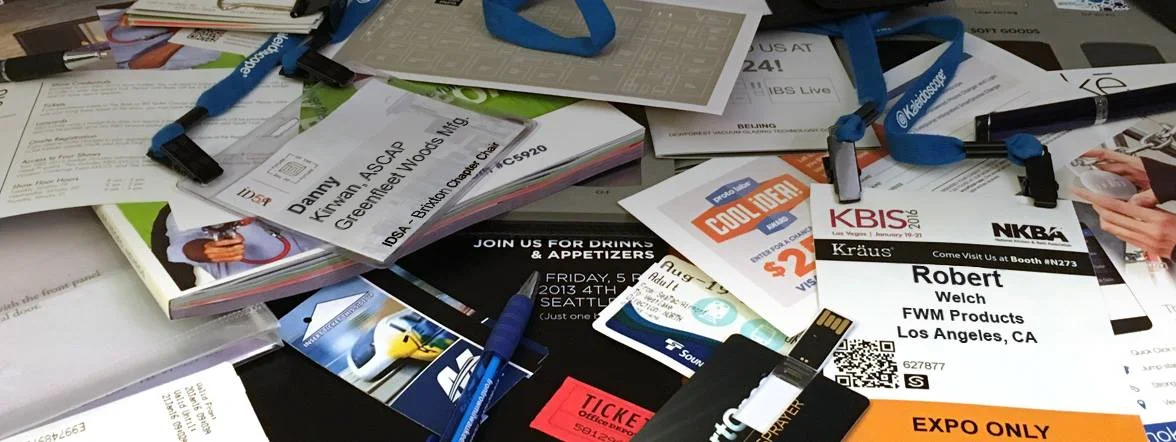
IDSA Discussion Meetup
Come to Bonfyre Grille at 6 o'clock on February 17th for an IDSA discussion meetup. Creatives and designers of all kinds welcome!
Hello from Madison!

Hello! You are reading my very first post to this newsfeed!
My name is Ben Rodgers and I am a designer currently in Madison, Wisconsin. Follow this blog to keep up to date with my creative endeavors and other adventures.
If you are interested in my services reach out and let's get something started!